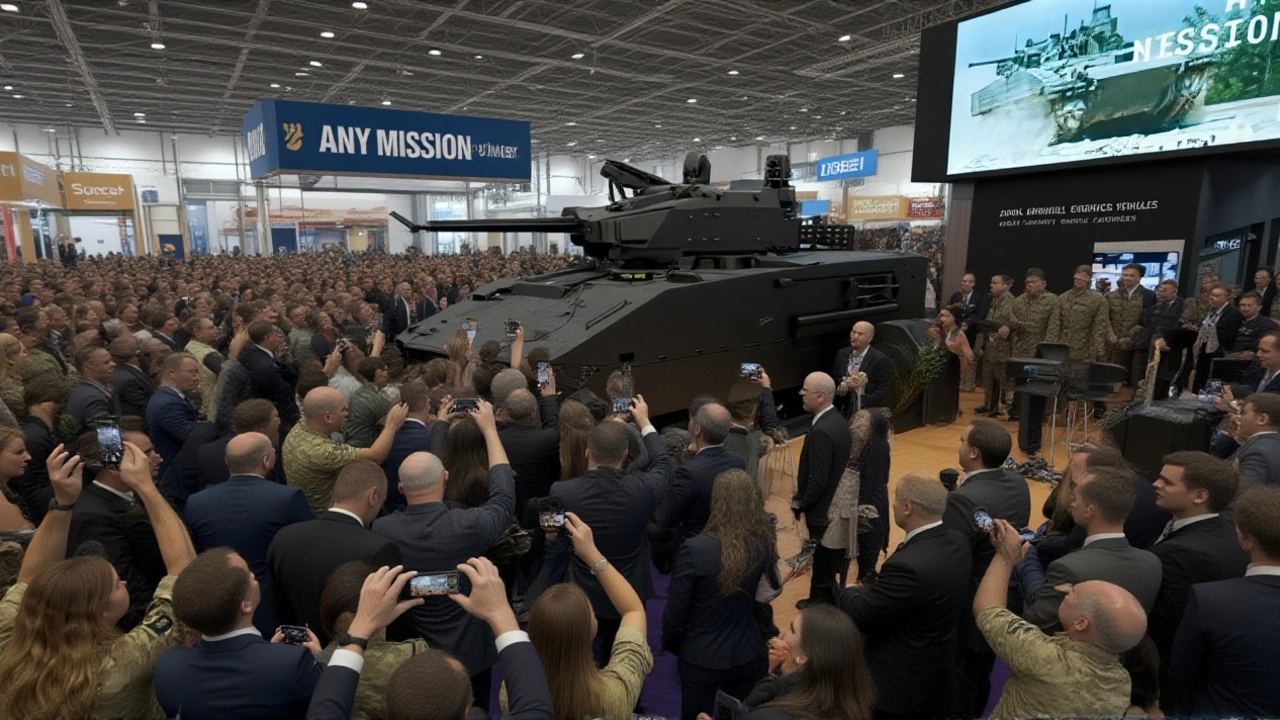
On September 9, 2025, at London’s ExCel Centre, General Dynamics Land Systems–UK and Lockheed Martin UK stunned the defence world by unveiling the next-generation AJAX Infantry Fighting Vehicle London — a bold leap forward in British armored warfare. The vehicle, unveiled during the Defence and Security Equipment International (DSEI) 2025 ExCel Centre, isn’t just an upgrade. It’s a generational shift. The British Army’s aging Warrior Infantry Fighting Vehicles, first fielded in 1988, are now 37 years old. And this new platform? It’s designed to bury them — not just replace them.
A New Turret, A New Era
The heart of the new AJAX IFV isn’t its stretched hull — though it’s 30 centimetres longer than the baseline Ares variant — but the uncrewed turret developed by Lockheed Martin at its Ampthill facility in Bedfordshire. This isn’t a retrofit. It’s a clean-sheet design. The turret mounts a 40mm CTA cannon, delivering four times the terminal effect of a standard 30mm high-explosive round, with armor penetration out to 2.5 kilometers. That’s not theory. That’s live-fire data from trials conducted in Wales last spring."It’s not about bigger guns," said Alex King, Business Development Lead for Complex Systems at Lockheed Martin. "It’s about precision, lethality, and staying alive in a world where enemy sensors can spot you from three klicks away. This turret reduces thermal signature by 40% compared to older designs. That’s not a feature. It’s a survival tool."
Designed for the Modern Battlefield
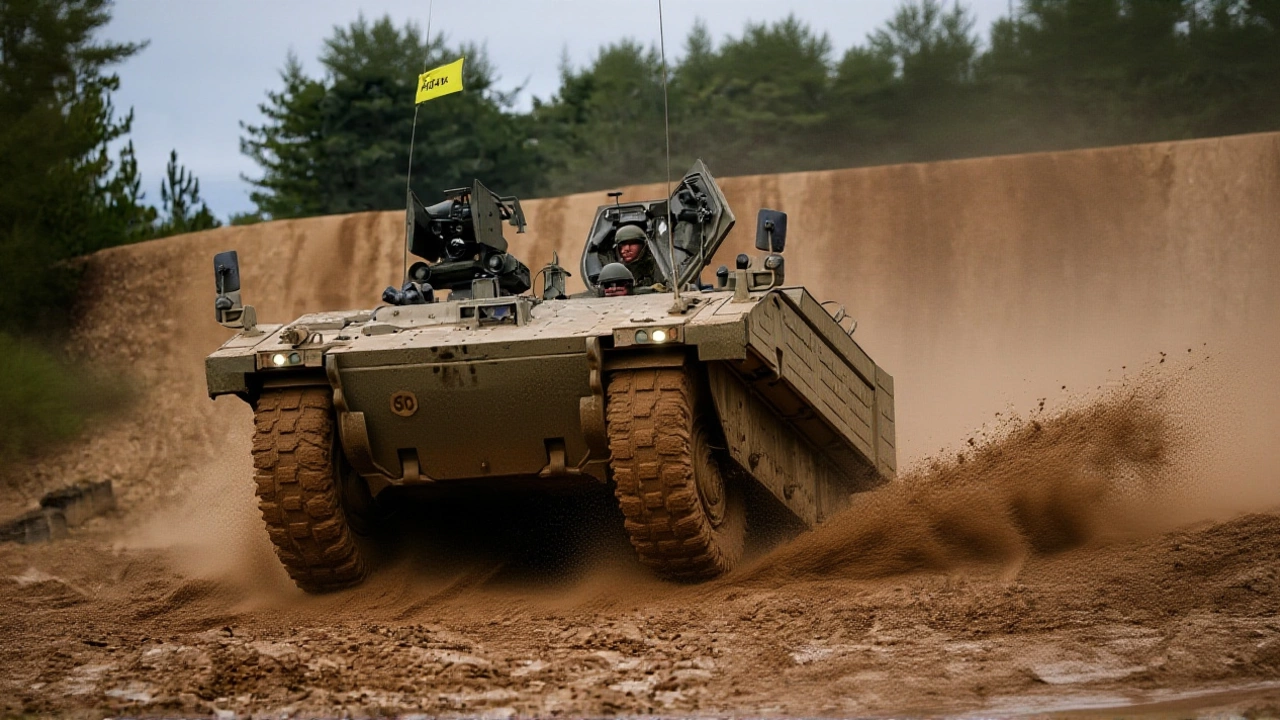
The vehicle carries a crew of three — driver, commander, and an optional dismountable gunner — plus eight infantrymen. The rear compartment? Fully configurable. Under-armour stowage for each dismount. Modular seating. Integrated power and data ports. This isn’t a troop bus. It’s a mobile command node.Composite rubber tracks from Soucy Defence of Canada — the same ones used on Latvia’s ASCOD 2s — provide lower ground pressure and self-adjusting tension. No more manual track adjustments in the field. No more broken torsion bars. The suspension? Independently adjustable hydropneumatic units on each road wheel. The hull? Nearly flat underneath. No protruding components. That means better mine resistance and easier maintenance.
And the modularity? Game-changing. The turret can swap out 25mm, 30mm, or 40mm cannons without re-engineering the entire vehicle. NATO allies can plug into the same architecture. The AJAX IFV runs on the same digital backbone as the existing Ajax family — a proven, battle-tested electronic architecture that handles sensor fusion, battlefield networking, and AI-assisted targeting.
Why This Matters: The Warrior’s Endgame
The British Army currently operates 625 Warrior IFVs. The first rolled off the line in 1984. They saw action in Bosnia, Iraq, and Afghanistan. But they’re brittle. Their armor can’t stop modern ATGMs. Their electronics are analog-era relics. The Warrior Capability Sustainment Programme (WCSP) was scrapped in 2021 after ballooning to £2.4 billion and missing every deadline.Now, the Army’s plan is clear: get 180 Ajax Common Base Platform vehicles delivered by December 2025. Then, starting in 2027, begin retiring Warriors — 50 a year. The new AJAX IFV isn’t just a replacement. It’s the cornerstone of a new doctrine: 10x lethality. That’s not marketing speak. It’s a metric tied to target acquisition speed, kill probability, and digital integration with drones, artillery, and satellite feeds.
Europe’s Bigger Game: The FAMOUS Programme
This isn’t a UK-only project. The AJAX IFV is being developed under the European Defence Agency’s FAMOUS programme — led by Finland and backed by 11 other nations. The goal? Standardize core components across European IFVs so that German, French, and British units can share spare parts, software updates, and maintenance protocols in real time."We’re not building a British vehicle for export," said a senior MoD official off-record. "We’re building a European vehicle that Britain leads. That’s the strategic shift."
What Comes Next?
Prototypes will begin live testing in Germany next spring, with troop trials scheduled for early 2026. The first production units are expected by late 2027. Export interest is already strong. Poland is watching closely. Estonia is asking for technical briefings. And Latvia? They bought 42 ASCOD 2s in 2023. The AJAX IFV looks awfully familiar."This vehicle proves the UK still has world-class defense engineering," said retired Brigadier Sarah Telford, now a defense analyst at RUSI. "But the real test isn’t the turret or the tracks. It’s whether the Ministry of Defence can deliver on time, on budget, and without the bureaucratic chaos that killed WCSP."
For now, the AJAX IFV stands as a symbol — of resilience, innovation, and the quiet determination of British industry to not just keep up, but to lead.
Frequently Asked Questions
How does the AJAX IFV differ from the original Ajax family?
While built on the same electronic architecture, the AJAX IFV features a lengthened hull, a new uncrewed turret with a 40mm CTA cannon, composite rubber tracks, and a modular design allowing for different cannon calibers. It’s optimized for infantry support, not reconnaissance, and carries eight dismounts versus the original Ajax’s six. The turret is entirely new, developed by Lockheed Martin UK, not a modified version of the existing Ajax turret.
Why is the 40mm CTA cannon so significant?
The 40mm CTA (Cased Telescoped Ammunition) cannon delivers four times the terminal effect of a 30mm HE round, penetrates armor at 2.5 kilometers, and uses lighter, more compact ammunition — allowing more rounds to be carried. It also fires programmable airburst rounds, ideal for urban combat and engaging targets behind cover. This gives infantry a firepower edge previously only available on main battle tanks.
When will the British Army start receiving the AJAX IFV?
The British Army expects to receive its first production AJAX IFVs by late 2027, following prototype testing in 2026. The 180 Ajax Common Base Platform vehicles are due by December 2025, and Warrior decommissioning will begin in 2027. Full operational capability is projected for 2030, with a phased rollout across armored brigades.
Is this vehicle export-ready?
Absolutely. The AJAX IFV was designed with export in mind — from its NATO-compatible digital architecture to its modular turret and low-maintenance tracks. Finland, Poland, and Estonia have already expressed interest. Lockheed Martin and General Dynamics are preparing for international bids under the FAMOUS framework, which encourages interoperability across allied nations.
What role does the FAMOUS programme play in this project?
FAMOUS, led by Finland and funded by the European Defence Agency, is creating common standards for European IFVs — from ammunition logistics to software interfaces. The AJAX IFV is one of the first platforms built to these standards, ensuring British vehicles can share parts, data, and maintenance systems with allies. This reduces long-term costs and boosts coalition readiness.
Why did the Warrior Capability Sustainment Programme fail?
The WCSP collapsed in 2021 after costs ballooned to £2.4 billion and delays stretched over a decade. Engineers struggled to retrofit 1980s-era hulls with modern electronics without compromising survivability. The AJAX IFV avoids this by starting fresh — using the proven Ajax platform as a base, not forcing new tech into an outdated chassis. It’s a lesson learned: sometimes, you need a new vehicle, not a patched-up old one.